Darioo Industrial / Line 06
Industrial Control Panel Design & Build, PLC & HMI Programming
The team that designs your panel also writes the PLC code and builds the HMI, so nothing gets lost between engineering and the wire duct.
Overview
Panels wired like we have to service them. Because we do.
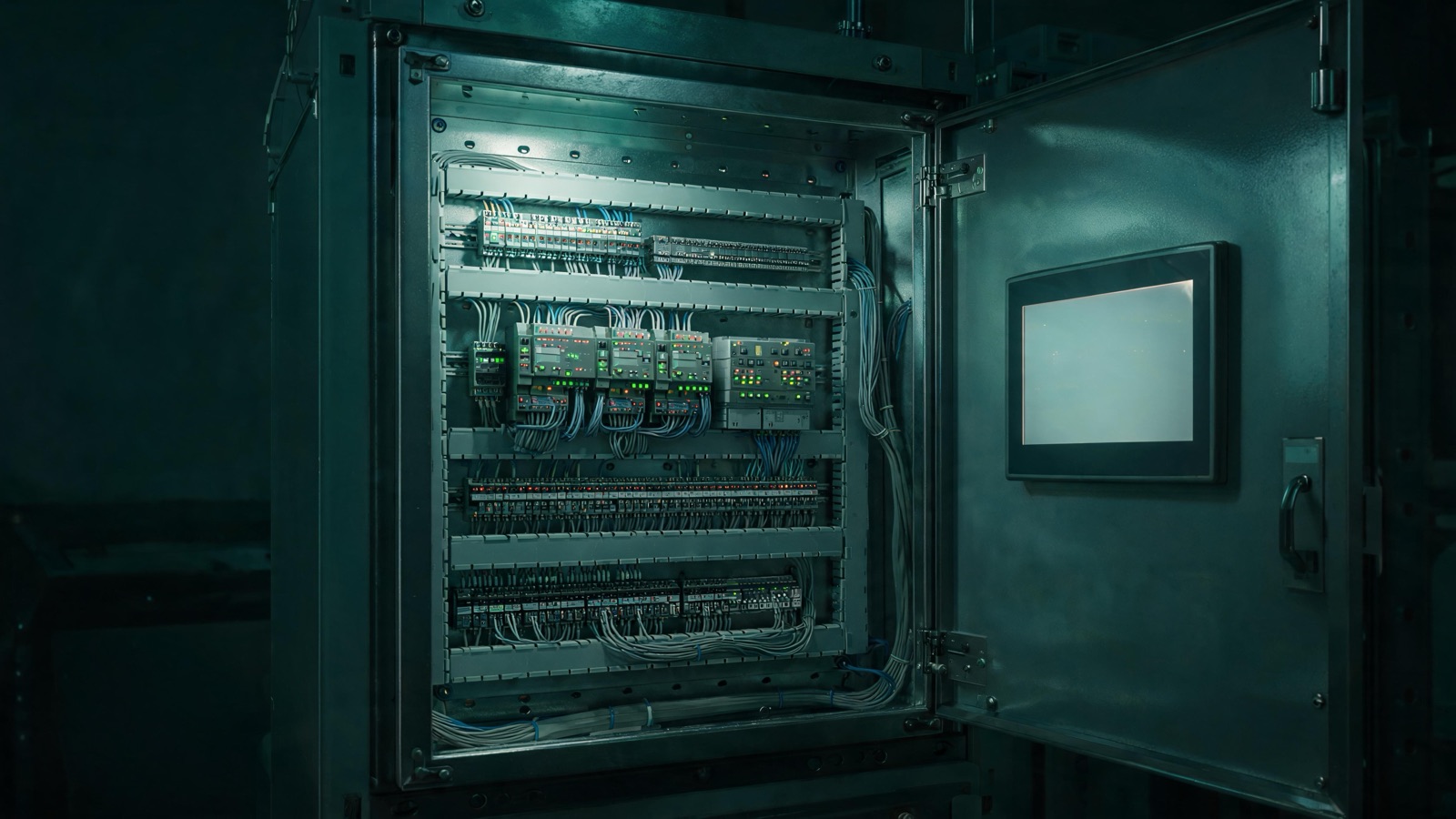
Most control panel problems do not show up on day one. They show up two years later, when the machine trips at 2 a.m. and the wiring inside the enclosure does not match any drawing on file. Darioo Industrial designs and builds control panels in Charlotte with that 2 a.m. call in mind: labeled wires, schematics that match reality, and layouts with enough room to actually work on the panel instead of fighting it.
The same team that builds the panel writes the PLC logic and the HMI screens that run it. We program across major platforms, so the platform choice comes from what fits your plant and your existing fleet, not from what one shop happens to know. Every program gets built with commented code and a logic structure a maintenance tech can actually follow, not a black box only the original programmer can touch.
Some projects start from a blank sheet: a new machine that needs its first panel. Others start with an enclosure someone else built, wired without a plan, running logic nobody fully understands anymore. Either way, you get a panel and a program built to be serviced, not just built to pass a factory test and disappear. Documentation ships with the panel, not as an afterthought you have to request later.
- Control panel design and fabrication
- PLC programming across major platforms
- HMI and operator screen development
- Electrical schematics and documentation
The problem
The panel nobody wants to open
Every plant has at least one panel nobody wants to open. It works, mostly, and everyone is quietly afraid that touching a wire will be the thing that finally breaks it for good. The integrator who built it is long gone, the schematics in the drawer describe a machine that stopped existing three revisions ago, and the one person who half understood the logic left the company two years back. So the panel just runs, untouched, until it cannot.
When it finally does trip, there is no shortcut. Maintenance is standing in front of a locked cabinet at 2 a.m. with a fault code and no map. Troubleshooting becomes power cycling and hoping, because the alternative is tracing wire by wire through a panel carrying years of undocumented field changes stacked on top of the original build. A problem that should take twenty minutes eats a shift.
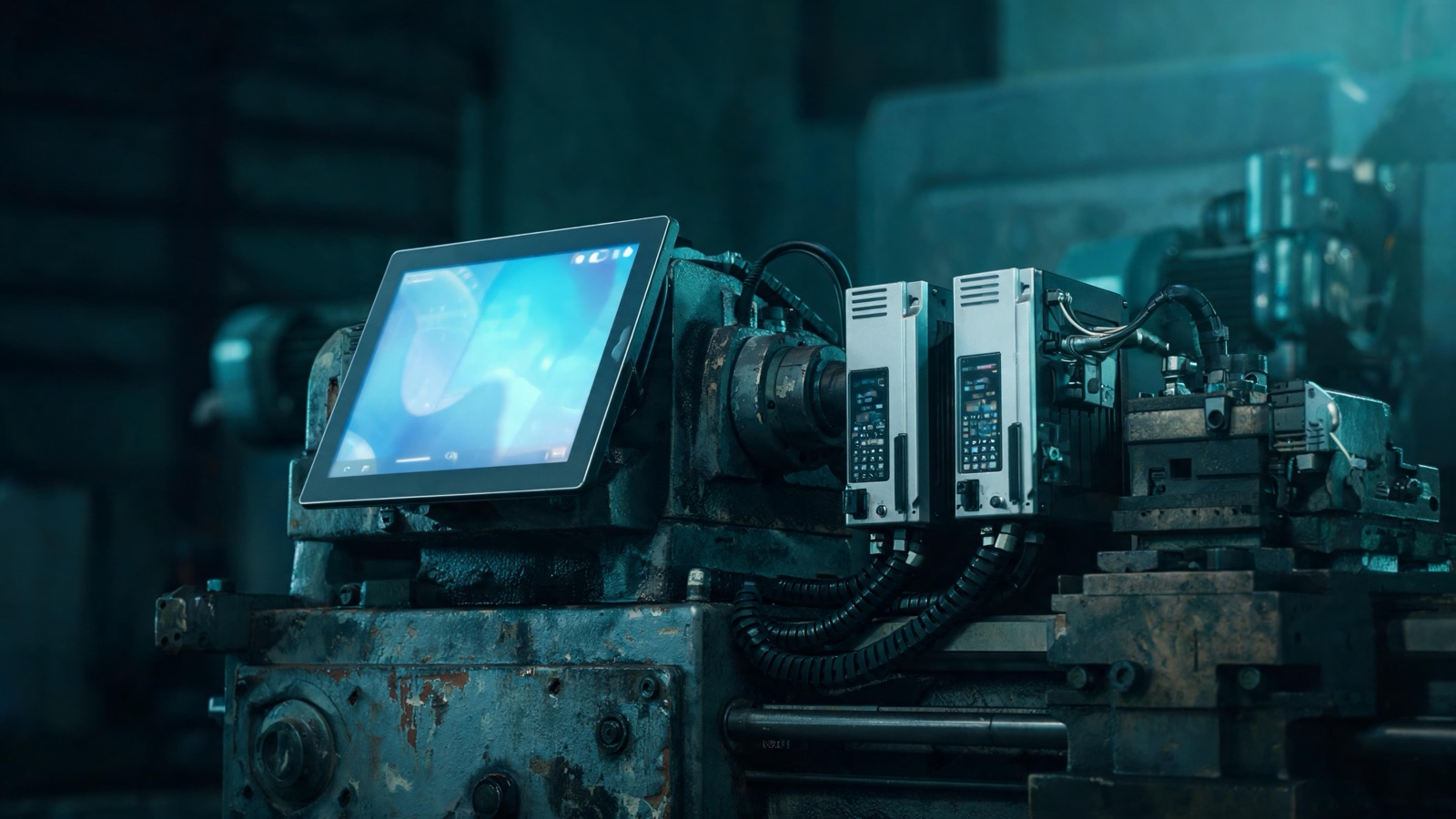
The operator screens do not help either. HMI layouts built for how the machine was supposed to run, not how your people actually run it, sit alongside alarms that say little more than fault. And when you need one sensor added or one interlock changed, what should be an afternoon job turns into an archaeology project, because nobody can say with confidence what the change will touch. That is the state most inherited panels end up in, and it is exactly what this service exists to fix.
Read the signs
Your controls need professional attention if
- Schematics are missing, or do not match the panel as it actually sits today
- One person understands the logic, and they are on vacation, out sick, or gone for good
- Faults get cleared with a power cycle because nobody trusts the troubleshooting path
- HMI screens do not match how your operators actually run the machine
- Adding one sensor or output means tracing wiring nobody ever documented
- The panel carries years of undocumented field changes layered on the original build
- The PLC program is locked, password protected, or the source is nowhere to be found
What you get
Everything this line covers, delivered by one team.
Control panel design
Enclosure layout, component selection, and panel drawings sized to the job and to the space you actually have to install it in.
Panel fabrication and wiring
Panels built in-house: mounted components, labeled wire, dressed wire duct, and landed terminals ready for power.
PLC programming
Control logic programmed across major platforms, structured and commented so a maintenance tech can follow it without calling us first.
HMI and operator screen development
Operator screens built around how your people actually run the machine, not a generic template with buttons nobody uses.
Electrical schematics and documentation
Full schematic package that matches the panel as built, not as it was originally specified.
I/O checkout and testing
Every input and output verified against the schematic before the panel goes anywhere near your floor.
Panel install and commissioning
Delivery, hookup, and startup support on your floor, with the same team that built the panel doing the commissioning.
Spare parts and documentation handoff
Landed spares inside the panel where practical, plus a documentation package your team keeps, not one we keep for you.
Not sure if your panel needs a rebuild or a cleanup?
Send us photos of the panel and a description of what it is doing. We will give you a straight read on scope before you commit to anything.
How this line runs
From first call to running on your floor.
Controls review and scope
We look at what you have, trace the existing panel and logic where one exists, and scope what a documented build or cleanup actually requires.
Electrical design and schematics
A full schematic package built to match the panel we are about to build, not a guess at what might work once it is wired.
Panel fabrication and wiring
Panels built in-house: mounted components, labeled wire, dressed duct, and terminals landed and ready for power.
PLC and HMI programming
Control logic and operator screens programmed and built by the same team that designed the panel, so nothing gets lost in translation.
Bench test
The panel and program run on the bench, I/O checked point by point, before anything ships to your floor.
Install support and documentation
We commission on-site, and the as-built schematics and program you receive match the panel sitting in front of you.
Where this fits
Applications and industries we build for.
- New machine control panels
- Retrofit and replacement panels
- PLC platform migrations
- HMI screen redesign
- Machine logic cleanup and documentation recovery
- Multi-panel line controls
- Consumer products manufacturing
- Automotive and mobility suppliers
- Food and beverage processing
- Building products and textiles
- Packaging and material handling systems
- Test and inspection equipment controls
What industrial control panel design and build includes
Control panel design and build covers everything between a blank enclosure and a panel ready to run production: enclosure layout sized to the components and the space you have to install it in, component selection matched to the application instead of whatever happens to be in stock, and a wiring plan that holds up over years of service, not just the day it ships.
Inside the door, that means labeled wire end to end, dressed wire duct with room to add a conductor later, and a terminal strategy that makes tracing a circuit a two-minute job instead of a half hour with a meter. Every panel leaves with as-built schematics that match what is actually inside the door, because a drawing that describes the panel as it was designed instead of as it was built is worse than no drawing at all.
- Enclosure and layout sized to the application and the install space
- Component selection matched to duty, not just to price
- Labeled wire and dressed duct throughout
- As-built schematics that match the panel as shipped
Control panel builder in Charlotte, NC
Darioo Industrial designs, fabricates, and programs control panels in Charlotte, North Carolina, under one ISO 9001:2015 quality system. Manufacturers across the Carolinas and the Southeast use us for panel builds tied to a new machine, a retrofit, or a standalone controls upgrade, and panels ship nationwide when the job calls for it.
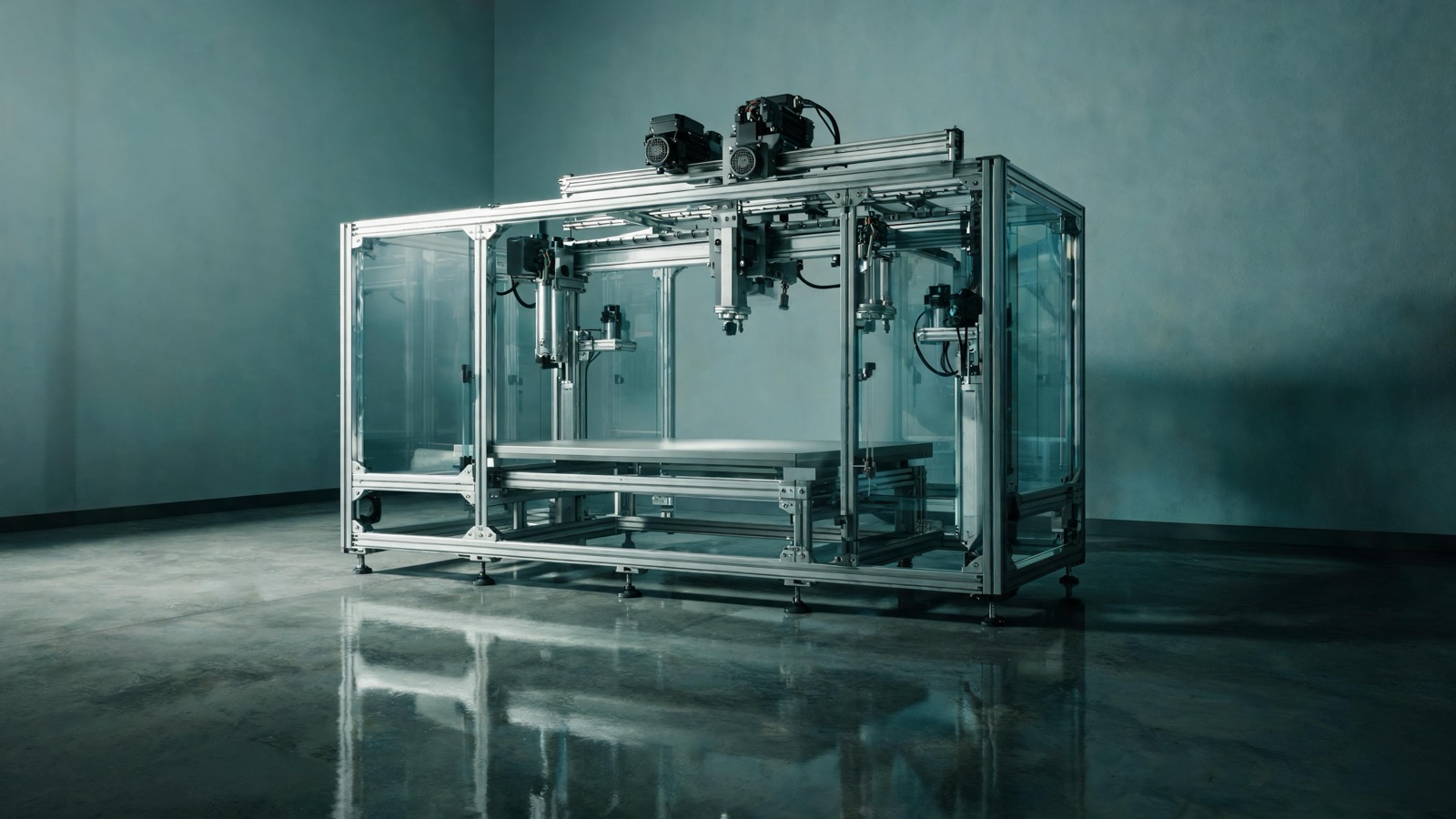
Being under the same roof as our machine building work matters even on a panel-only job. The people wiring your enclosure work down the hall from the people who design and build complete machines, so a panel scoped here gets checked against how real machines actually get installed and serviced, not just against a drawing on a screen.
PLC programming your maintenance team can live with
Every PLC program we write gets built the same way regardless of platform: commented rungs, a logic structure organized by function instead of by whatever order it was written in, and naming that tells a technician what a tag actually does. We program across major industrial platforms and match the platform to what your plant already runs, not to what one programmer happens to prefer.
You get the source code and the passwords. That is not a premium option, it is how every program leaves here, because a panel your own team cannot open under their own login is a panel that depends on us being available forever. If a previous integrator locked you out of your own machine, sorting that out and handing you a program you actually control is common work for us, not an unusual request.
HMI screens designed for operators, not programmers
An HMI screen built by someone who never watched the machine run tends to organize itself around the PLC memory map instead of around the job. We build screen flow around how your operators actually move through a shift: the screens they touch most sit where they can reach them fastest, and the ones they rarely need do not clutter the main view.
Alarms get the same treatment. A message that just says fault 12 sends an operator hunting through a binder. An alarm that says what tripped and roughly where sends them straight to the problem. Where a machine runs more than one product or setting, we build recipe screens that let operators change over without needing an engineer standing next to them.
Budget honesty
What actually drives control panel cost
A panel quote depends on what is inside the door and what the logic has to do, and any number given before that is defined is a guess. These are the levers that move price, so you can weigh the trade-offs while the panel is still on paper.
I/O count and panel size
More inputs and outputs mean more terminals, more wire, and a bigger enclosure to fit it all with room to service. A panel with forty points costs less than one with four hundred.
Logic and sequence complexity
Simple run-stop-fault logic programs fast. Interlocked sequences, recipe handling, and coordination between multiple stations take real programming time to build and test.
HMI scope and screens
A single status screen is quick work. A full operator interface with multiple screens, recipes, and trending adds design and build time on top of the panel itself.
Documentation depth
A basic schematic set costs less than a full package with I/O lists, spare parts documentation, and a maintenance-ready program printout. Depth here is rarely the place to cut.
Bench test and commissioning scope
Checking I/O on a bench takes less time than a full functional test against a sequence, and on-site commissioning scope depends on how much of the machine the panel has to prove out.
Side by side
A documented panel vs an undocumented one
The panel itself is only half the story. What it costs you over its life comes down to whether anyone can actually read it.
| Undocumented panel | Documented Darioo panel | |
|---|---|---|
| Time to diagnose a fault | Hours of tracing wire with no map | Minutes, working from schematics that match reality |
| Risk of a wrong-wire mistake | High, with no as-built drawing to check against | Low, verified against documentation that matches the panel |
| Dependence on one technician | Total, the person who understands it is a single point of failure | Minimal, any competent tech can follow the documentation |
| Cost of the next modification | Days of investigation before the first wire moves | Typically a straightforward job scoped from the schematics |
| Audit and safety review readiness | Poor, missing or inaccurate records raise questions | Ready, current schematics and program on file |
| Resale or relocation of the machine | Harder, the next owner inherits the same unknowns | Easier, documentation transfers with the machine |
Line 06 questions
Asked on almost every control panels & plc call.
Which PLC platforms do you program?
We program across major industrial platforms rather than locking into one brand. The right platform for your panel usually comes down to what your plant already runs and what your maintenance team is trained on. Tell us your existing equipment fleet and we will match the panel to it, so spares and support stay simple instead of adding a fifth platform to your floor.
Can you fix a panel someone else built badly?
Yes. Undocumented panels and locked or uncommented code are common calls for us, not rare ones. We start by tracing the existing wiring and logic against reality, then rebuild the schematics and clean up the program so the next person who opens that enclosure is not starting from zero. Some jobs are a full rebuild, others are documentation recovery and a logic cleanup.
Do you build the panel and program the PLC, or just one?
Both, and by the same team. One group designs and fabricates the panel, and that same group writes the PLC logic and builds the HMI screens. That keeps the electrical design and the control logic talking to each other from the start, instead of a panel shop and a programmer working from separate assumptions.
What documentation do we get with the panel?
A full schematic package that matches the panel as it actually gets built, plus commented PLC code and an I/O list. That documentation ships with the panel, not as a follow-up request. If your maintenance team ever needs to troubleshoot without calling us, the drawings in hand should be enough to get them there.
Can you take over a machine when the integrator who built it is gone?
Yes, and it is one of the most common calls we get. We start by tracing the existing panel and logic against what is actually installed, rebuild the schematics to match reality, and clean up or rewrite the program so it makes sense to someone who did not write it. You do not need the original integrator on speed dial for us to pick up the machine.
Do you give us the source code and documentation, or keep it?
You get it, every time. Source code, passwords, schematics, and the I/O list all ship with the panel as part of the deliverable, not as something you have to request later or pay extra for. A panel your team cannot open under their own login defeats the purpose of documenting it in the first place.
Can you build a panel for a machine another shop is building?
Yes. We regularly build and program panels for machines designed and fabricated elsewhere. Send us the machine specification and the controls scope, and we will design, build, and program the panel to match, then bench test it before it ships to meet the rest of the machine on your floor or theirs.
How do you bench test a panel before it ships?
Every input and output gets checked against the schematic on the bench, point by point, before the panel leaves the shop. Where the scope calls for it, we run the program against a simulated sequence to exercise the logic, not just confirm that wires land where they should. Problems get found and fixed here, not on your floor during startup.
Related lines
Often scoped together with this work.

Start here
Talk to an engineer about line 06.
Send the part, the problem, or the machine that is fighting you. We will tell you straight whether this line is the right fix.