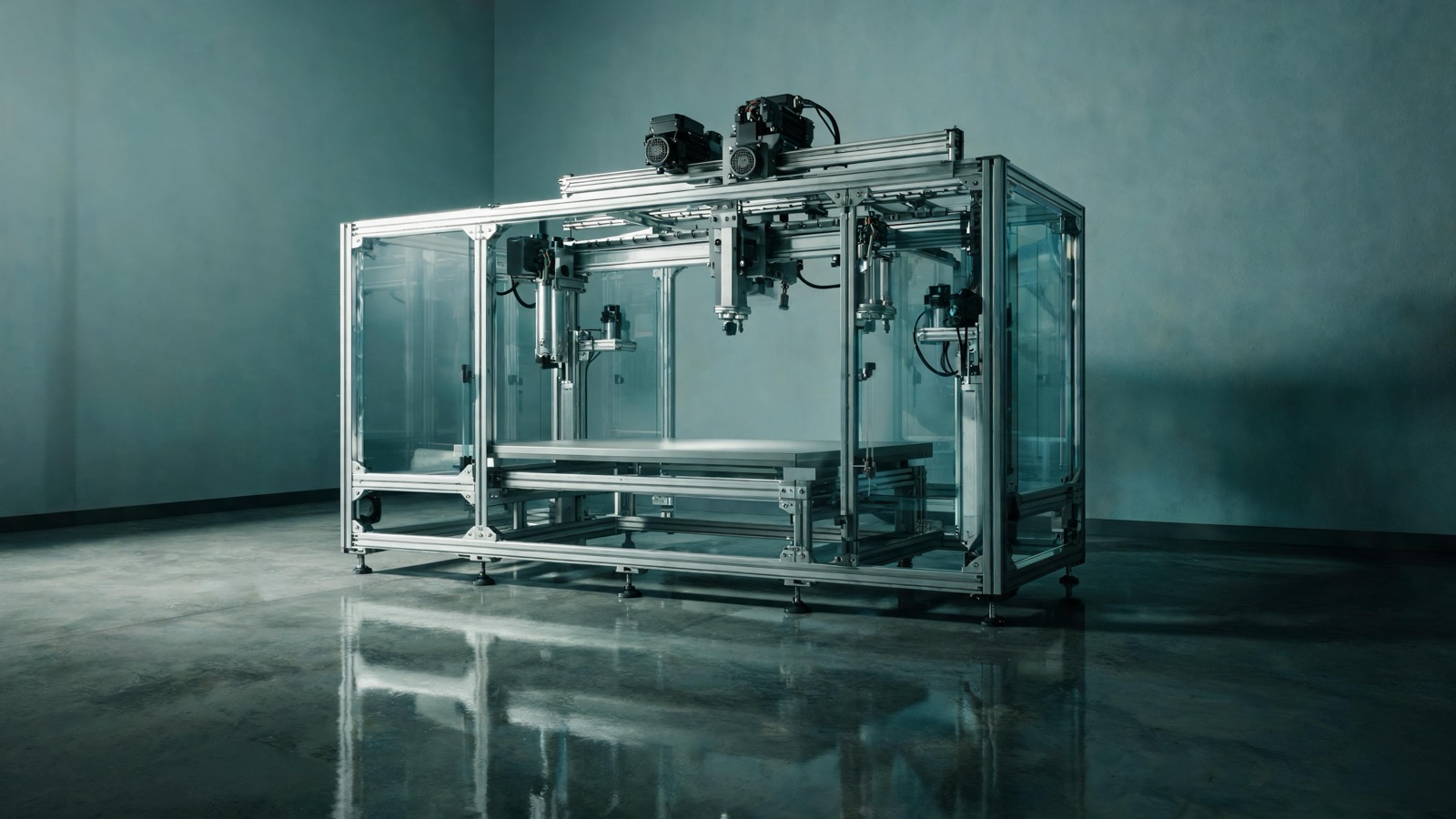
Darioo Industrial / Line 01
Custom Machine Design & Build
One engineering team takes your part, your rate, and your floor space and delivers a machine that runs production from day one.
Overview
Machines nobody sells, built for the job only you have.
Somewhere on your floor there is a job that fights you every shift. The catalog equipment almost fits, the manual workaround almost keeps up, and the throughput number never quite lands. That job is what custom machine building is for, and it is the core of what Darioo Industrial does.
We handle the entire build under one roof in Charlotte: feasibility and concept work, full mechanical design in SolidWorks, frame fabrication and precision machining, controls and panel build, assembly, and a factory acceptance test where the machine runs your actual parts at rate before it ships. One team owns the outcome, so there is no gap between the people who designed the machine and the people you call when you want it to do more.
The discipline that makes this work is the design review gate. Nothing gets cut, wired, or ordered until you have seen the design and signed off. That single checkpoint is why our builds hold their quoted price and why startups happen on schedule instead of stretching into rework.
- Concept and feasibility studies
- SolidWorks mechanical design
- Frame fabrication and precision machining
- Assembly and factory acceptance testing
The problem
The job your catalog equipment was never built to do
Every plant has one process that carries the margin, and it is almost never the one the equipment vendors planned for. So the line runs on workarounds: an operator doing a job a machine should do, a station rebuilt twice a year, a bottleneck everyone schedules around. Each shift it costs a little labor, a little scrap, a little rate. Nobody writes that number down, but it compounds every week.
The usual fixes fall short in familiar ways. General machine shops can build parts but not a working machine with controls and safety. Big integrators want projects with more zeros than yours. And the catalog machine that almost fits still forces your process to bend around it, which is backwards.
A custom machine flips that. The machine is designed around your part, your rate, and your floor, and the workaround disappears. The question is not whether that machine can exist. It is whether the builder you pick can take it from sketch to production without the budget and schedule drifting. That is the part we have spent a decade getting right.
Read the signs
You are ready for a custom machine build if
- A manual station is the bottleneck that sets the pace for the whole line
- You searched for equipment and nothing in any catalog fits your part or process
- An operator is doing a repetitive job that injures wrists and eats labor hours
- Quality problems trace back to a process step that depends on operator skill
- Demand grew past what your current equipment can run, even on overtime
- A machine vendor quoted you a standard machine plus a pile of compromises
- You have the concept sketched and need engineering to make it real
What you get
Everything this line covers, delivered by one team.
Feasibility and concept study
Cycle-time math, layout options, and a risk read on your application before you commit real budget.
Complete mechanical design
Full SolidWorks model and drawings for the machine: frame, motion, stations, guarding, and utilities.
Fabrication and machining
Welded and extrusion frames, machined components, and precision assemblies produced in-house.
Controls and panel
The control panel, PLC logic, and HMI screens for the machine, built and programmed by the same team.
Factory acceptance test
The machine runs your parts at your target rate in our shop, with you watching, before it ships.
Install and commissioning
Delivery, placement, utility hookup, site acceptance, and operator training on your floor.
Documentation package
Drawings, schematics, spare parts list, and operating procedures your maintenance team can actually use.
Have the problem half-defined? That is enough to start.
A napkin sketch and a rate target are all a feasibility call needs. An engineer will tell you straight if custom is the right answer.
How this line runs
From first call to running on your floor.
Feasibility
We study your part, rate, and floor space, then tell you straight whether a custom machine makes sense and roughly what it involves.
Specification
A written spec defines what the machine must do, how fast, and how success is measured. The fixed quote is built on this document.
Design review
You see the full SolidWorks design and sign off before anything is cut, wired, or ordered. Changes cost pennies here, not thousands later.
Build and program
Fabrication, machining, panel build, assembly, and PLC and HMI programming happen in our Charlotte shop with progress checkpoints.
FAT on your parts
The machine runs your actual parts at your target rate while you watch. It does not ship until it proves the number.
Install and support
We deliver, commission, train your operators, and stay on call through our field engineering line for the life of the machine.
Where this fits
Applications and industries we build for.
- Assembly and joining stations
- Test and inspection machines
- Material handling and transfer
- Packaging and end-of-line equipment
- Dispensing and filling systems
- Press and forming stations
- Part marking and serialization
- Consumer products manufacturing
- Automotive and mobility suppliers
- Food and beverage processing
- Building products and textiles
What counts as a custom machine, and when do you need one
A custom machine is production equipment engineered for one specific job: your part, your cycle time, your floor. That covers assembly stations, test and inspection machines, material handling and transfer systems, dispensing and filling equipment, forming and pressing stations, and complete multi-station lines. It is the opposite of catalog equipment, which is designed for the average of every buyer and optimized for none of them.
You need one when the process that makes you money has no off-the-shelf answer. In most plants that moment shows up as a bottleneck: a manual station that cannot keep up, a quality step that depends on one skilled operator, or a product change the old equipment cannot follow. When bending your process around standard equipment starts costing rate, scrap, or people, purpose-built wins.
How a custom machine builder in Charlotte, NC actually works
Darioo Industrial builds machines end to end in Charlotte, North Carolina: mechanical design in SolidWorks, frame fabrication and precision machining, control panel build, PLC and HMI programming, assembly, and factory acceptance testing, all under one roof and one ISO 9001:2015 quality system. Manufacturers across the Carolinas and the Southeast use us as their machine design and build partner, and complete machines ship nationwide.
Single-source matters more than it sounds. When the designer, the fabricator, the panel builder, and the programmer are one team, problems get solved at the design table instead of discovered at your dock. It is also why our quotes hold: nobody is passing surprises between subcontractors and calling them change orders.
- Mechanical and electrical design under one roof
- One accountable team from concept to commissioning
- Factory acceptance test on your parts before shipping
- Field engineering support after the install, for years
Custom machine design services: what the engineering phase covers
Machine design and build is mostly decided before the first chip is cut. Our machine design services cover concept development, cycle time and throughput analysis, complete 3D mechanical design, motion and actuator sizing, safety and guarding design, and the electrical and controls architecture that will run it. Every design ends in a formal review where you approve the machine on the screen before it exists in steel.
That review gate is the single biggest protector of your budget and schedule. Design changes made on the model are cheap. The same changes made after fabrication are not. We hold the gate on every project, including the fast ones.
Build-to-print machine building for teams with finished designs
Already have the machine designed? We build to print. Send the drawings and the BOM and our shop fabricates, machines, wires, assembles, and tests to your documentation. If we find a problem in the design, you hear about it before fabrication, not after, because building a known problem into steel helps nobody.
Build-to-print work runs through the same ISO 9001:2015 process as our own designs: incoming inspection, documented build checkpoints, and a factory acceptance test against your criteria.
Budget honesty
What actually drives custom machine cost
Every buyer asks what a custom machine costs, and any builder who answers with a number before scoping is guessing with your money. These are the levers that move the price, so you can see the trade-offs while the machine is still on paper.
Rate and cycle time
Faster machines need faster motion, more stations, or both. The jump from a comfortable cycle to an aggressive one is often the biggest single cost driver.
Number of motion axes
Every servo axis adds a drive, programming, and integration time. A clever fixture or cam can sometimes replace an axis outright.
Changeover and product mix
A machine that runs one part is simpler than one that runs a family. Quick-change tooling and recipe-driven controls add cost up front and pay it back in flexibility.
Safety scope
Guarding, light curtains, interlocks, and safety-rated controls scale with how operators interact with the machine, and they are not the place to save money.
Controls and data requirements
Basic run-stop logic is one thing. Recipe management, traceability, and plant-network integration are another. Define what you actually need early.
Documentation and spares
Schematics, manuals, and a spare parts package add modest cost at build time and save multiples of it the first week the machine is down.
Line 01 questions
Asked on almost every custom machines call.
What information do you need to quote a custom machine?
Three things get a quote moving: the part or product (samples or CAD), the rate you need to hit, and the space and utilities available. If you have neither drawings nor a spec, that is fine. The feasibility study exists exactly for that case, and plenty of our projects start as a sketch and a phone call.
Can you build a machine from drawings we already have?
Yes. We take build-to-print machine work as well as full design-and-build. If your drawings have gaps or the design has a problem, we flag it before fabrication instead of building the problem into steel.
What happens if the machine does not hit rate?
That risk is what the factory acceptance test is for. The machine proves rate on your parts in our shop before shipping, so performance questions get answered in Charlotte, not on your production floor during launch week.
Do you support the machine after installation?
Yes. The same team that built your machine runs our field engineering line: troubleshooting, preventive maintenance, spare parts, and upgrades as your product or rate changes over the years.
How long does a custom machine take to design and build?
Most builds run a few months from kickoff to installed, driven by complexity and long-lead purchased components like drives and robots. Simple single stations move faster. You get a real schedule with the quote, with the design review and FAT dates on it, so you always know where the project stands.
How is the price set, and does it hold?
The quote is fixed against the written specification, and the design review locks the machine before anything is built. Price moves only if you change the spec, and you see that cost before agreeing to it. Scope creep surprises are a process failure, and the process here is built to prevent them.
Can you automate part of the machine now and more later?
Yes, and it is often the smart play. We design machines with automation in mind, so a manual load station today can take a feeder or a robot later without redesigning the frame or controls. You spend for the capacity you need now and keep the upgrade path open.
What industries do you build custom machines for?
The build process is industry-agnostic and our history covers consumer products, automotive and mobility suppliers, food and beverage processing, building products, and textiles, among others. If you make a physical product and a process step needs a machine that does not exist, that is our lane.
Related lines
Often scoped together with this work.
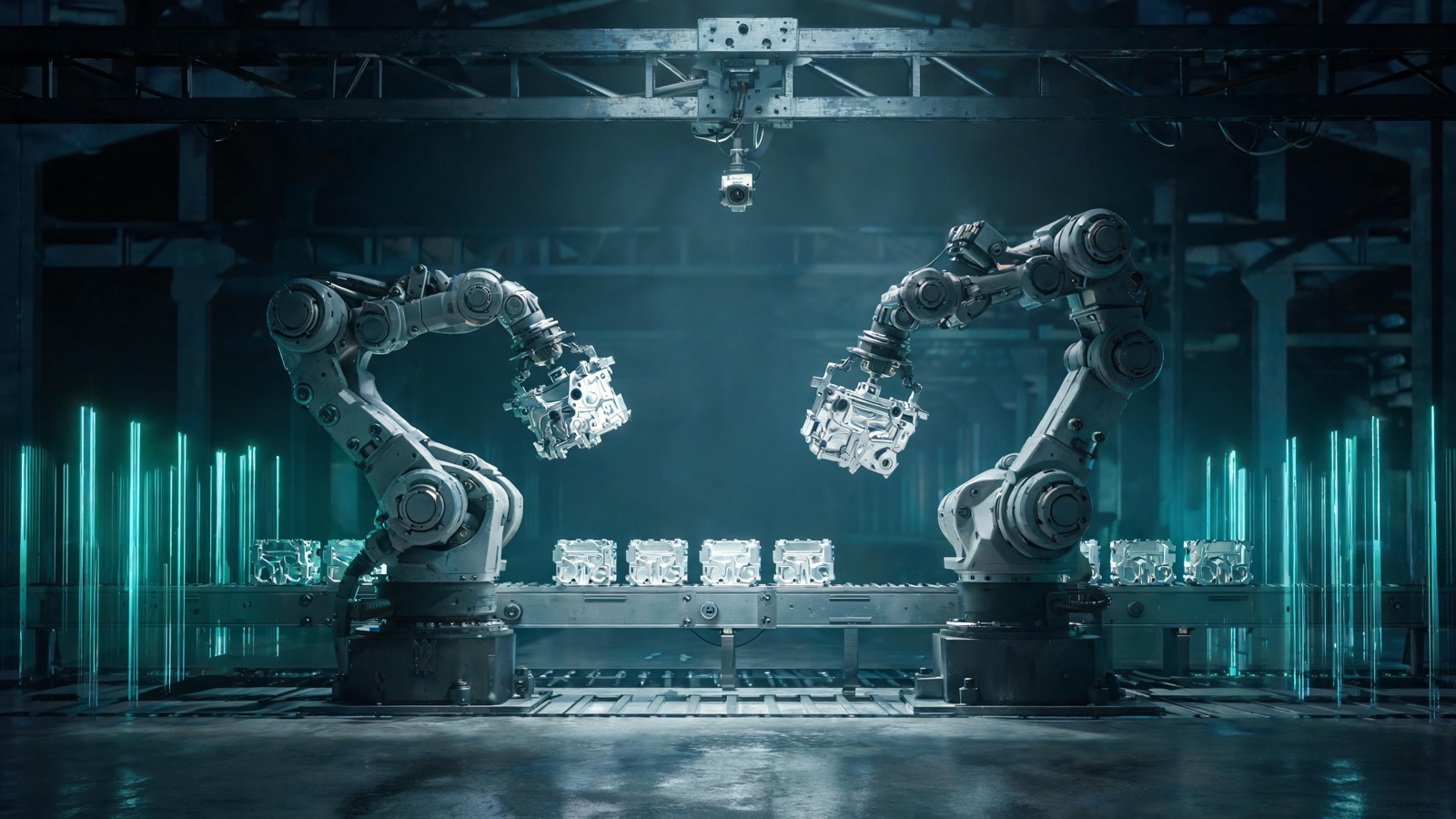
Industrial Automation, Controls & Robotics
Add capacity without adding headcount.
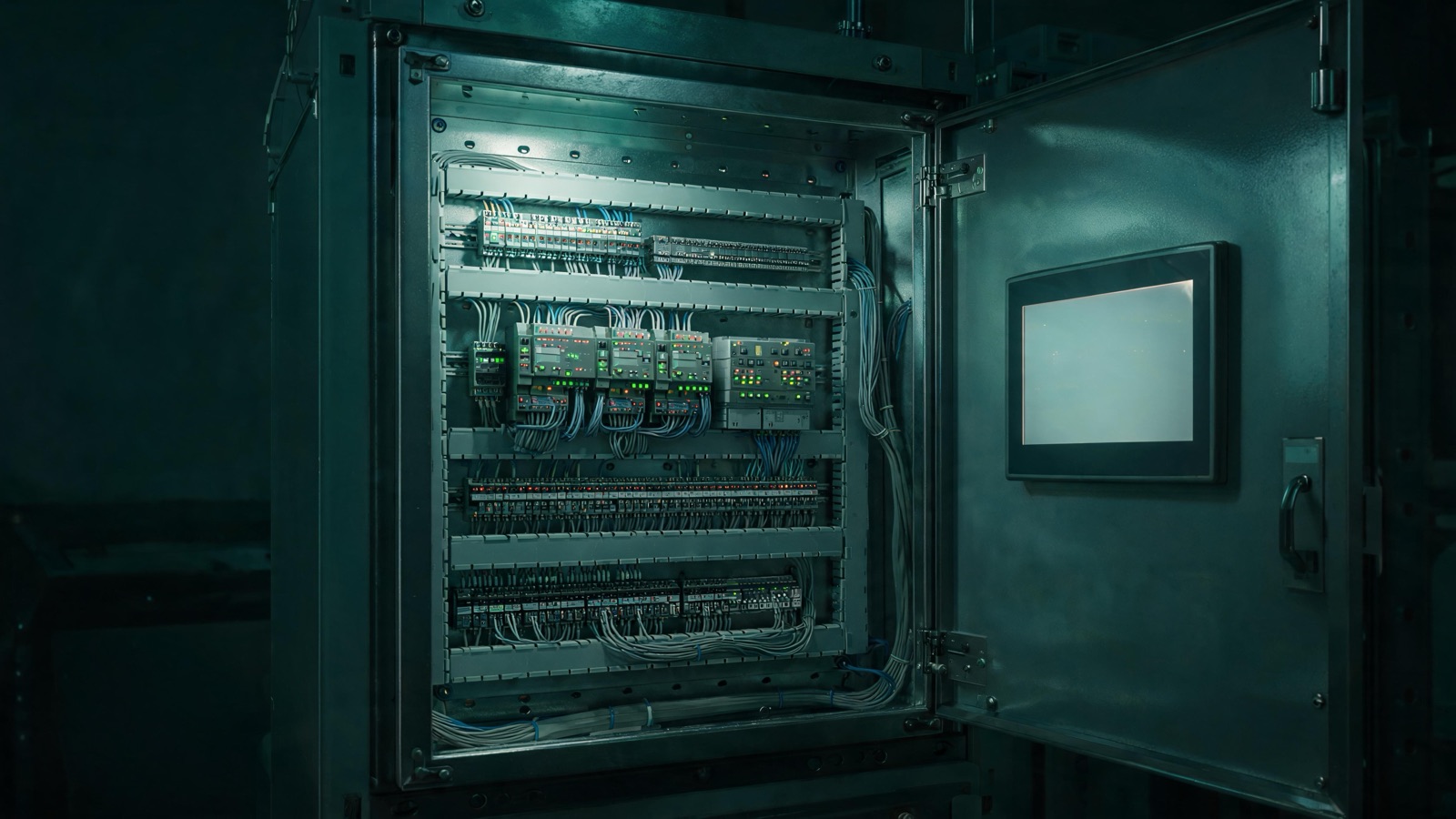
Industrial Control Panel Design & Build, PLC & HMI Programming
Panels wired like we have to service them. Because we do.
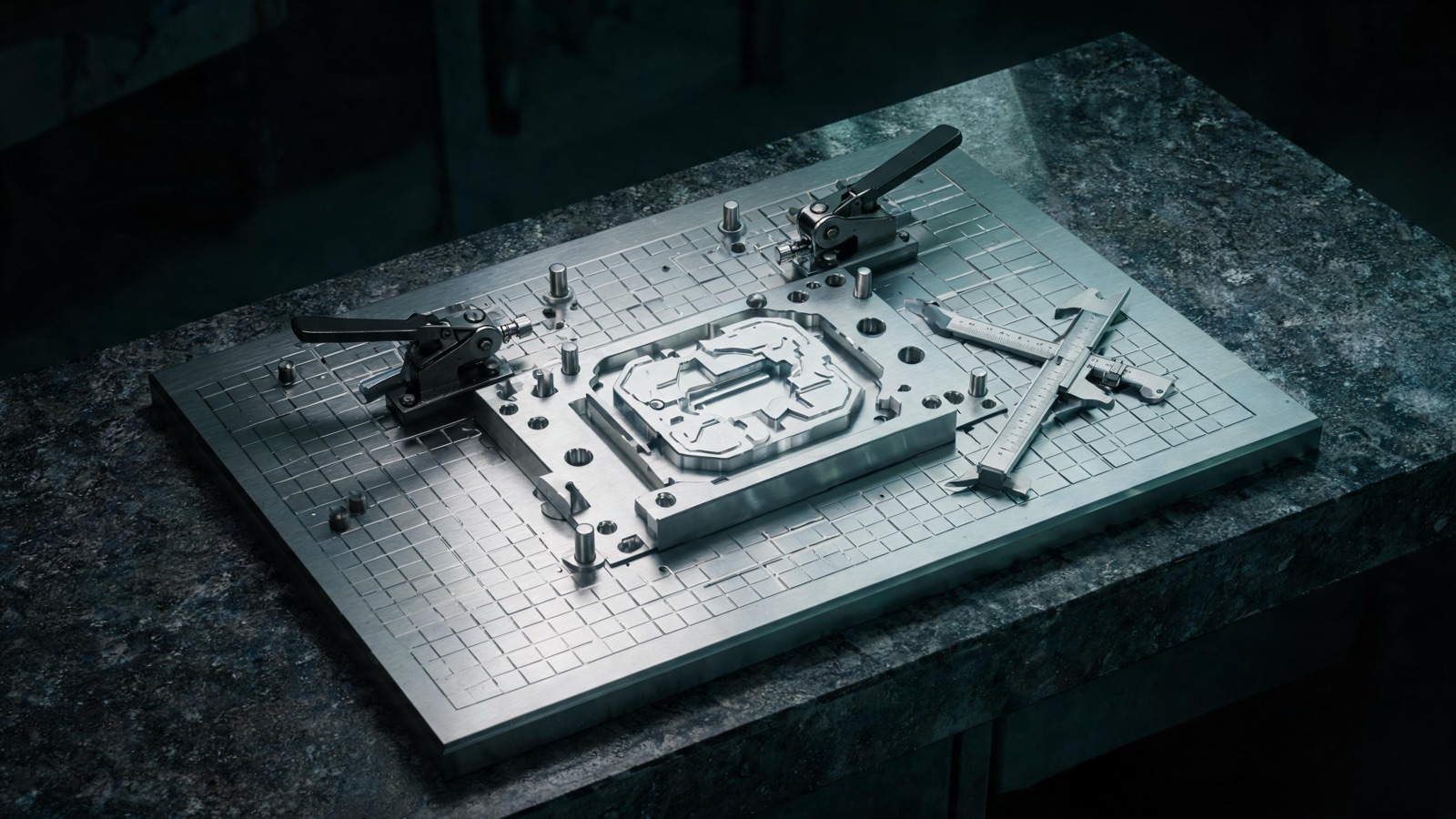
Custom Jigs, Fixtures & Tooling Design & Manufacturing
Repeatability you can bolt to the table.
Start here
Talk to an engineer about line 01.
Send the part, the problem, or the machine that is fighting you. We will tell you straight whether this line is the right fix.