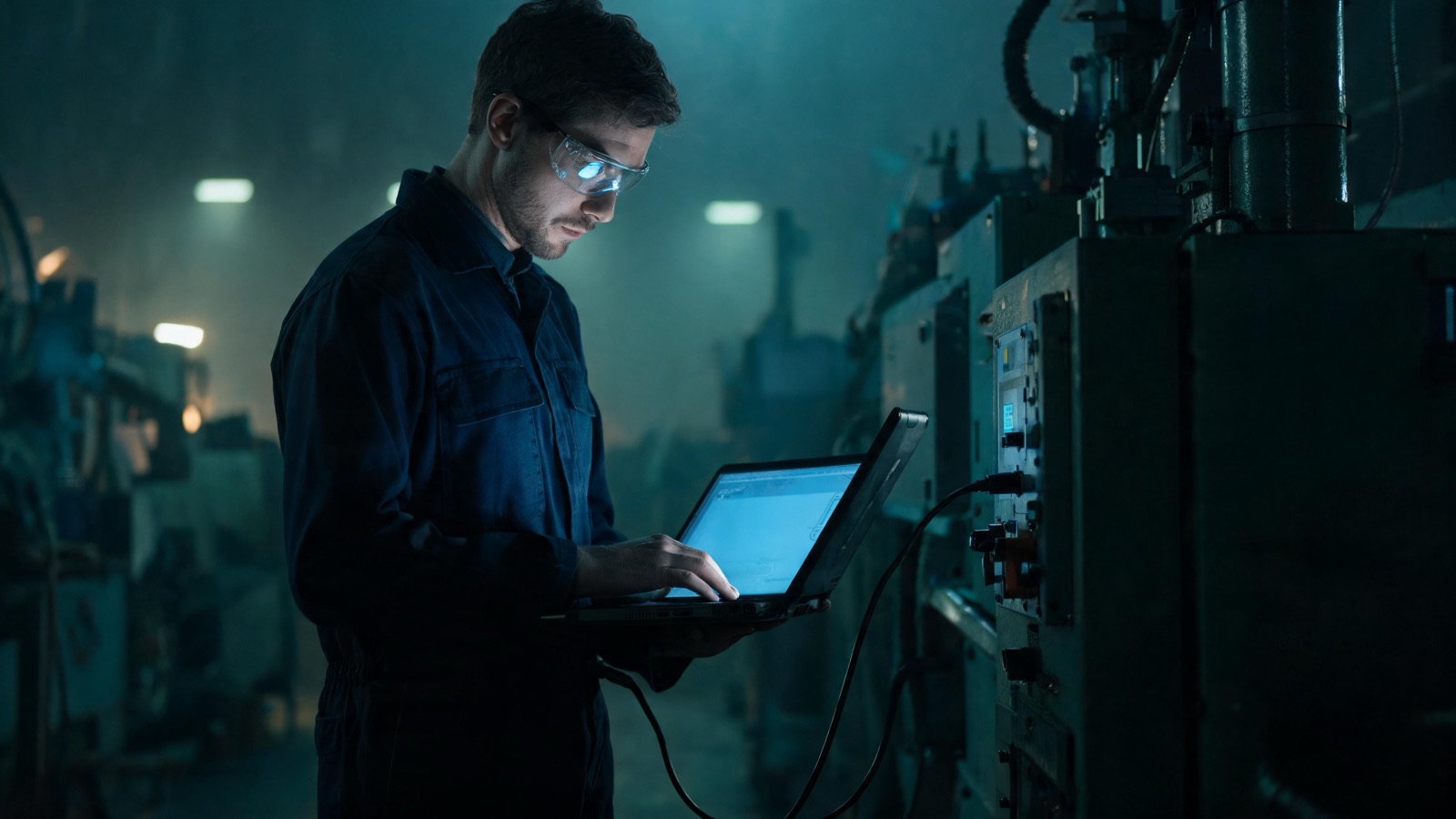
Darioo Industrial / Line 07
Field Engineering & Industrial Maintenance
Engineers who design and build machines for a living show up on your floor to keep them running, no matter who built them.
Overview
We do not disappear after commissioning.
A down machine does not care whose fault it is. It costs you a shift, a shipment, or a customer while you wait for someone to show up and figure out what is wrong. If you manage maintenance on a plant floor, you know the gap between a promised response and an engineer who actually understands the machine. Darioo Industrial closes that gap. We are a machine builder first, and a lot of the equipment we service, we designed and built ourselves.
Our field engineering line covers the day to day of keeping a plant running: on-site troubleshooting, preventive maintenance programs that catch problems before they become downtime, and machine moves when a line has to relocate or get reinstalled. We work on machines we built and machines built by someone else. Our team has more than 10 years designing, building, and servicing industrial equipment in Charlotte, North Carolina, and we operate under ISO 9001:2015, so the same discipline behind a machine build goes into every service call.
A lot of the calls we get are for machines nobody at the plant remembers the builder of, because that company closed, got bought, or stopped answering the phone years ago. We take those on too. If the documentation is gone, we rebuild the drawings, spare parts list, and operating procedures as we work the machine, so the next repair is faster than this one. We cover Charlotte and the surrounding Carolinas, with travel into the broader Southeast for the right job.
- On-site troubleshooting and repair
- Preventive maintenance programs
- Machine moves and reinstallation
- Breakdown response
The problem
The maintenance problem nobody has time to fix
A machine goes down and the first call used to go to the company that built it. For a lot of plants, that company is gone. It got bought, it closed, or it stopped answering the phone years ago. So the call goes to whoever picks up, and the person who shows up has never seen this machine before. You pay for the visit either way, whether the fix holds or not.
Inside the plant, the maintenance team is not much better off. Two or three people are covering every machine on the floor, and the day fills up with the loudest problem, not the most important one. A bearing that is starting to howl gets ignored because a line is down right now. By the time anyone circles back, the howl has turned into another breakdown, and the cycle repeats itself every week.
Preventive maintenance is supposed to break that cycle, but it rarely survives contact with a production schedule. The PM gets pushed a week, then a month, then it quietly stops happening at all, because production always wins the argument. Meanwhile the one person who actually understands how a machine behaves, the quirks, the workaround, the setting nobody wrote down, gets closer to retirement every year. When that person leaves, the machine does not get easier to fix. It gets a lot harder.
Read the signs
Call in field engineering if
- The same machine keeps going down for the same kind of reason
- The company that built the machine is gone or too slow to help
- Nobody has current documentation for a machine that matters
- Preventive maintenance keeps getting bumped for production and never actually happens
- A machine or line has to move to a new spot or a new building
- Breakdowns get patched enough to run instead of actually fixed
- You are one retirement away from losing the only person who understands a machine
What you get
Everything this line covers, delivered by one team.
On-site troubleshooting and repair
An engineer on your floor tracing the actual fault, mechanical, electrical, or controls, instead of swapping parts and hoping.
Preventive maintenance programs
A scheduled PM plan built around your machines and your production calendar, so failures get caught before they become downtime.
Machine moves and reinstallation
Rigging, disconnect, transport coordination, and reinstallation when a machine has to relocate within your plant or to a new facility.
Breakdown response
A machine builder on the floor when a line goes down, working the problem instead of reading it off a script.
Support for machines from any builder
Troubleshooting and repair on equipment we did not build, including machines whose original manufacturer is no longer in business.
Documentation rebuild
Drawings, schematics, spare parts lists, and operating procedures reconstructed for machines whose paperwork is missing or out of date.
Spare parts identification
Cross-referencing obsolete or unmarked components to parts you can actually buy, so the next failure does not mean another emergency call.
Maintenance team training
Hands-on walkthroughs with your maintenance staff so routine issues get handled on your floor without waiting on a callback.
Tell us what the machine is doing, and we will tell you straight if we can help.
Describe the machine and the symptom, even without a part number or a manual in hand. An engineer will give you a straight read on what it probably is and what a visit looks like.
How this line runs
From first call to running on your floor.
Equipment review
We look at the machine, its run history, and whatever documentation exists, so the visit starts from facts instead of guesses.
Prioritized plan or troubleshooting visit
For an emergency call, an engineer heads to the floor and starts tracing the fault. For a broader engagement, we build a prioritized plan ranked by downtime risk and criticality.
Root-cause fix
We fix the actual failure, not just the symptom that stopped the line, so the same breakdown does not repeat itself next month.
Documentation rebuild
As we work the machine, we capture what we find, drawings, settings, spare parts, so the next repair starts ahead instead of from zero.
Preventive maintenance cadence
We set a PM schedule sized to what your production calendar can actually absorb, timed to catch wear before it becomes downtime.
Ongoing support
You keep a machine builder on call for the life of the equipment, for the next breakdown, the next move, or the next upgrade.
Where this fits
Applications and industries we build for.
- Consumer products manufacturing
- Automotive and mobility suppliers
- Food and beverage processing
- Building products and textiles
- Packaging and end-of-line equipment
- Assembly and production lines
- Robotic cells and automated equipment
- CNC and machine tool support
- Conveyor and material handling systems
- Legacy and orphaned equipment support
- Multi-shift production plants
- Plant relocations and line reconfigurations
What field engineering and industrial maintenance covers
Field engineering and industrial maintenance covers the work that keeps a machine running after it is installed. That includes on-site troubleshooting and repair, preventive maintenance programs built around your equipment, machine moves and reinstallation when a line has to relocate, and breakdown response when something stops without warning. It covers electrical, mechanical, and controls problems, not just one of the three.
The difference between this and a typical service call is who shows up. Our engineers design and build machines for a living, so a control panel or a mechanical layout is not a mystery to read, it is the same kind of work they do every day. That background is what turns a service visit into an actual fix instead of a parts swap that buys a few more weeks.
Industrial maintenance services in the Carolinas
Darioo Industrial is based in Charlotte, North Carolina, and most of our field engineering work happens within a short drive of the shop. We cover the greater Charlotte area and the surrounding Carolinas as our core territory, with travel further into the Southeast for the right job or the right relationship.
What sets a machine builder apart from a general maintenance contractor is the depth of the fix. A technician can swap a sensor or reset a drive. A machine builder can tell you why the sensor keeps failing, whether the mounting is wrong, or whether the machine needs a small design change to stop the problem for good. In a region full of manufacturers running equipment for years past its original design life, that difference matters.
- Charlotte, NC based, with the Carolinas as home territory
- Travel into the broader Southeast for the right job
- A machine builder team, not a call center dispatching technicians
- ISO 9001:2015 quality system on every service call
Supporting orphaned and legacy equipment
A lot of the calls we get are for machines whose original builder is gone. The company closed, got bought, or stopped answering the phone years ago, and the plant is left running equipment nobody outside the building understands anymore. We take those machines on. Our engineers read an unfamiliar control panel or mechanical layout the way the people who built it would, because that is the same work we do on our own designs every day.
When the documentation is missing, we rebuild it as we go, drawings, schematics, and a spare parts list your team can actually use. We also work out a spare parts strategy for components that are obsolete or unmarked, cross-referencing them to parts you can buy today instead of a part number that stopped shipping a decade ago. The goal is that the next repair on that machine is faster than this one, for whoever handles it.
Preventive maintenance that actually happens
Most PM programs fail for the same reason. They get written once, handed to a maintenance team that is already stretched, and the first time production needs the line, the PM slides. It slides again the next month, and eventually it stops happening at all, not because anyone decided to skip it, but because nobody ever built it around what the floor could actually absorb.
We build the schedule around your production calendar instead of an ideal one, short windows during planned downtime or slow shifts, sized to what your team has room for. We also will not hand you a number claiming exactly how much downtime a PM program saves. Nobody can honestly calculate a breakdown that did not happen. What we can do is show you the machines that used to fail on a predictable pattern and stopped, and let that record speak for itself.
Budget honesty
What actually drives field engineering and maintenance cost
A one-off service call and an ongoing maintenance program price out differently, and these are the factors that actually move the number, not a flat rate that ignores your situation.
Machine condition and history
A machine with a clean maintenance history and known failure modes gets diagnosed faster than one nobody has touched or documented in years.
Documentation state
Existing drawings and spare parts lists save real time. When documentation has to be rebuilt from scratch, that work gets priced into the visit.
Criticality and downtime exposure
A machine that stops the whole line gets a different urgency and scope than a redundant one, and that shapes how a visit or program gets planned.
PM scope and frequency
A basic inspection and lubrication schedule costs less than a program covering controls checks, wear tracking, and detailed component life data.
Travel and site logistics
Distance from Charlotte, site access, and how many machines are covered on a single trip all factor into what a visit or program costs.
Side by side
A machine builder in the field vs a parts-swap technician
Both approaches can get a machine running again, but they tend to leave you in very different places six months later.
| Parts-swap approach | Machine builder approach | |
|---|---|---|
| Diagnosis method | Swap the part that usually fails and see if the machine runs | Trace the fault back to the actual cause, mechanical, electrical, or controls |
| Repeat breakdowns | Same failure often returns within weeks or months | Root cause gets addressed, so the same fault is less likely to repeat |
| Documentation after the visit | Rarely updated, what was learned stays with the technician | Documentation gets captured or rebuilt as part of the visit |
| Ability to modify or improve the machine | Out of scope, the machine gets put back exactly as it was | Can recommend or make a design change if the same failure keeps happening |
| Spare parts strategy | Reorders the same part number until it stops being available | Cross-references obsolete parts and can redesign around unavailable components |
| Long-term cost behavior | Cost stays flat or climbs as the same problem repeats | Cost tends to drop over time as root causes get addressed |
Line 07 questions
Asked on almost every field engineering call.
Do you only service machines Darioo built?
No. We support machines from any builder, including equipment whose original manufacturer is no longer around to call. Because our team designs and builds machines every day, we read an unfamiliar control panel or mechanical layout the way the people who built it would, and get to the actual fault instead of guessing.
What if the machine documentation is missing or wrong?
That happens more than plant managers like to admit, especially on older equipment that has changed hands a few times. When the drawings, schematics, or spare parts lists are gone, we rebuild them as we work the machine, so you walk away with documentation your team can use for the next repair, not just a fixed machine.
Can you set up a preventive maintenance program for our plant?
Yes. We build the PM schedule around your specific machines, run hours, and production calendar instead of handing over a generic checklist. Most programs cover mechanical inspection, lubrication, control system checks, and wear item tracking, timed to catch problems while they are still cheap to fix instead of after they take down a shift.
Do you handle machine moves within or between facilities?
Yes. We coordinate the disconnect, rigging, transport, and reinstallation when a machine or line has to relocate, along with the utility hookup and startup checks once it lands. Most moves also get a quick inspection and any overdue maintenance handled while the machine is already apart, so it goes back into production in better shape than it left.
Do you only take service calls if we sign a maintenance contract?
No. We take one-off emergency calls as well as ongoing maintenance relationships. If a machine is down and you need someone on the floor, call us. We will not promise a guaranteed response time on a one-off call the way a scheduled maintenance relationship can, but we will tell you honestly what we can do and when.
Can you move a machine to a completely new plant, not just a different spot on our floor?
Yes. We handle machine moves within a facility and moves to a new building or a new plant altogether, including disconnect, rigging, transport coordination, reinstallation, and startup checks once the machine lands. A move to a new plant is a good time to catch up on overdue maintenance and rebuild documentation while the machine is already apart.
Can you train our maintenance team on our own equipment?
Yes. Part of most engagements is walking your maintenance staff through the machine directly, not just fixing it and leaving. The goal is for your team to handle the routine issues themselves and call us for the ones that actually need a machine builder, instead of waiting on a callback for everything.
How do preventive maintenance programs get scheduled around our production?
We build the PM calendar around your actual production schedule, not the other way around. That usually means short windows during planned downtime, changeovers, or slow shifts, sized to what your team can absorb without stopping a line that does not need to stop. A PM plan that production will not fight is the only kind that survives past the first quarter.
Related lines
Often scoped together with this work.
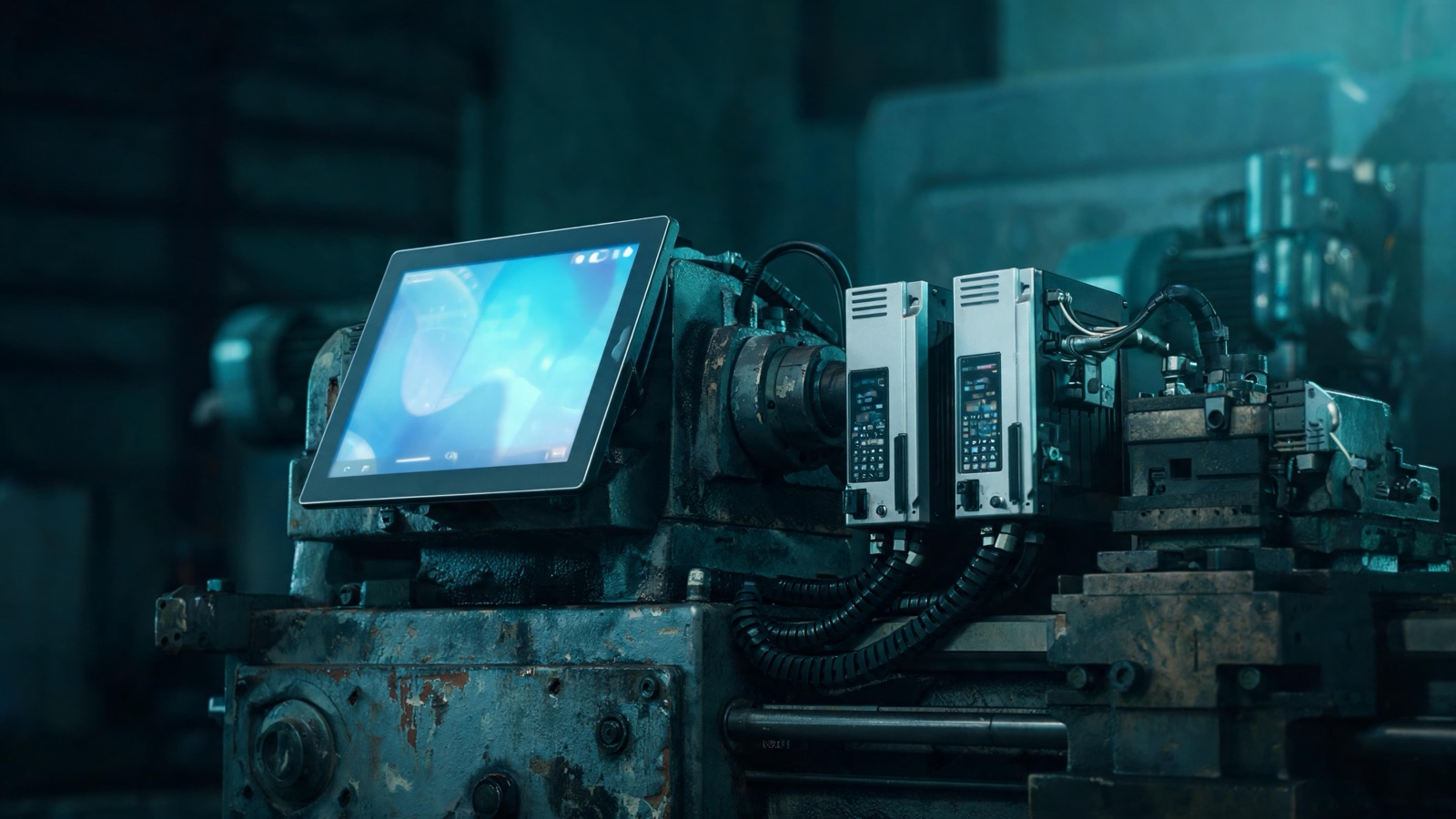
Machine Retrofits, Upgrades & Modernization
Your machine is not dead. Its controls are.
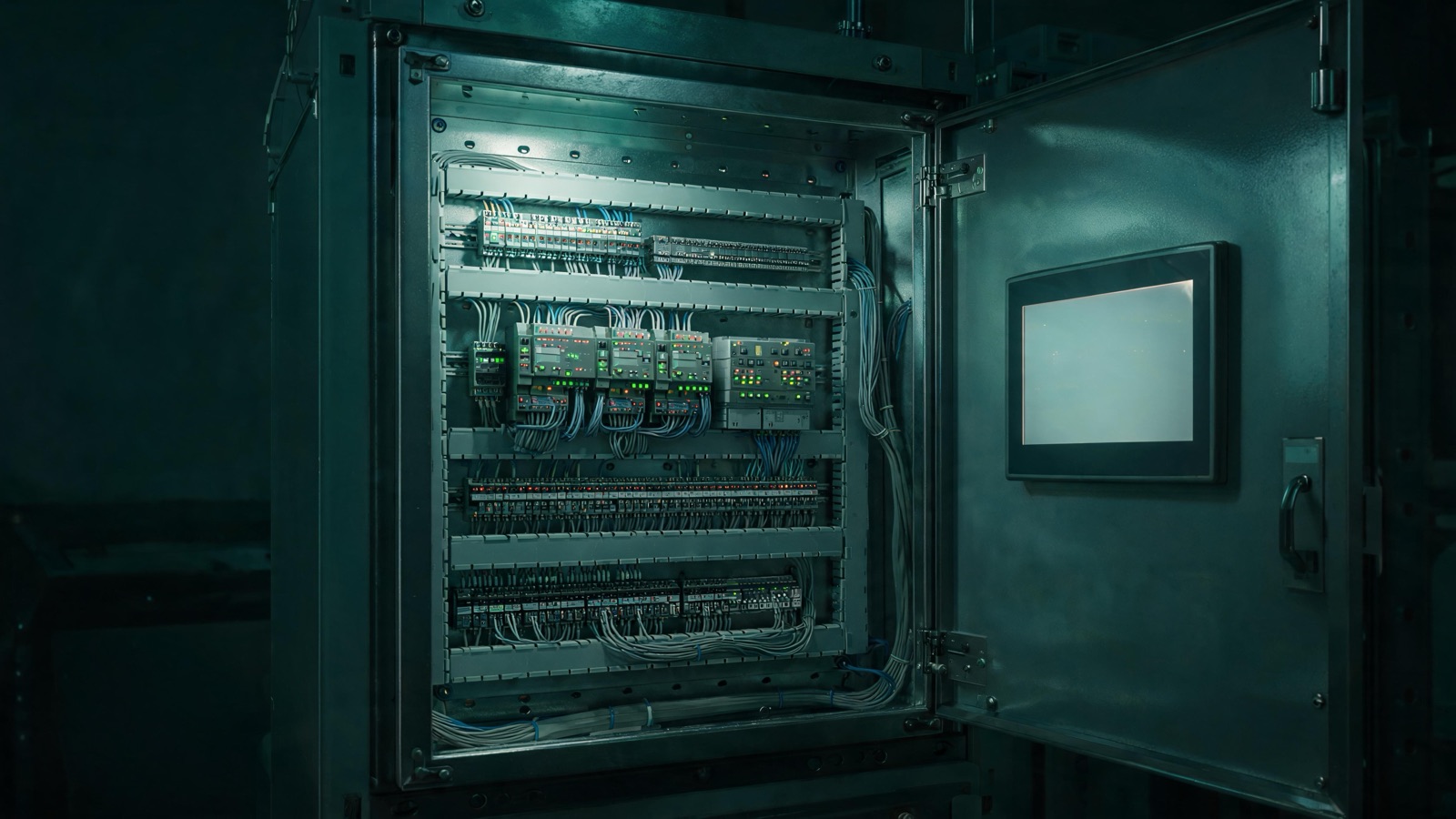
Industrial Control Panel Design & Build, PLC & HMI Programming
Panels wired like we have to service them. Because we do.
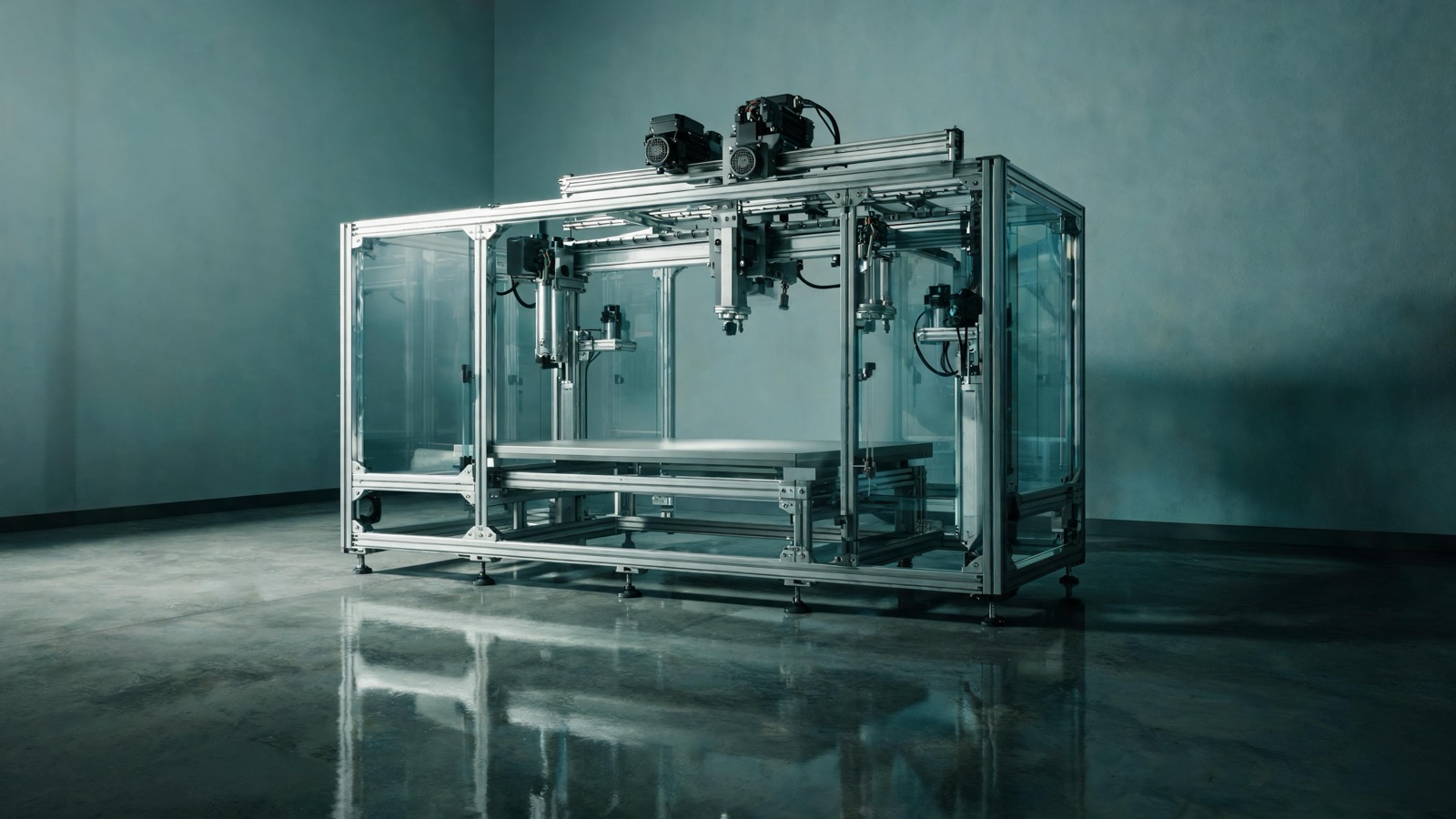
Custom Machine Design & Build
Machines nobody sells, built for the job only you have.
Start here
Talk to an engineer about line 07.
Send the part, the problem, or the machine that is fighting you. We will tell you straight whether this line is the right fix.