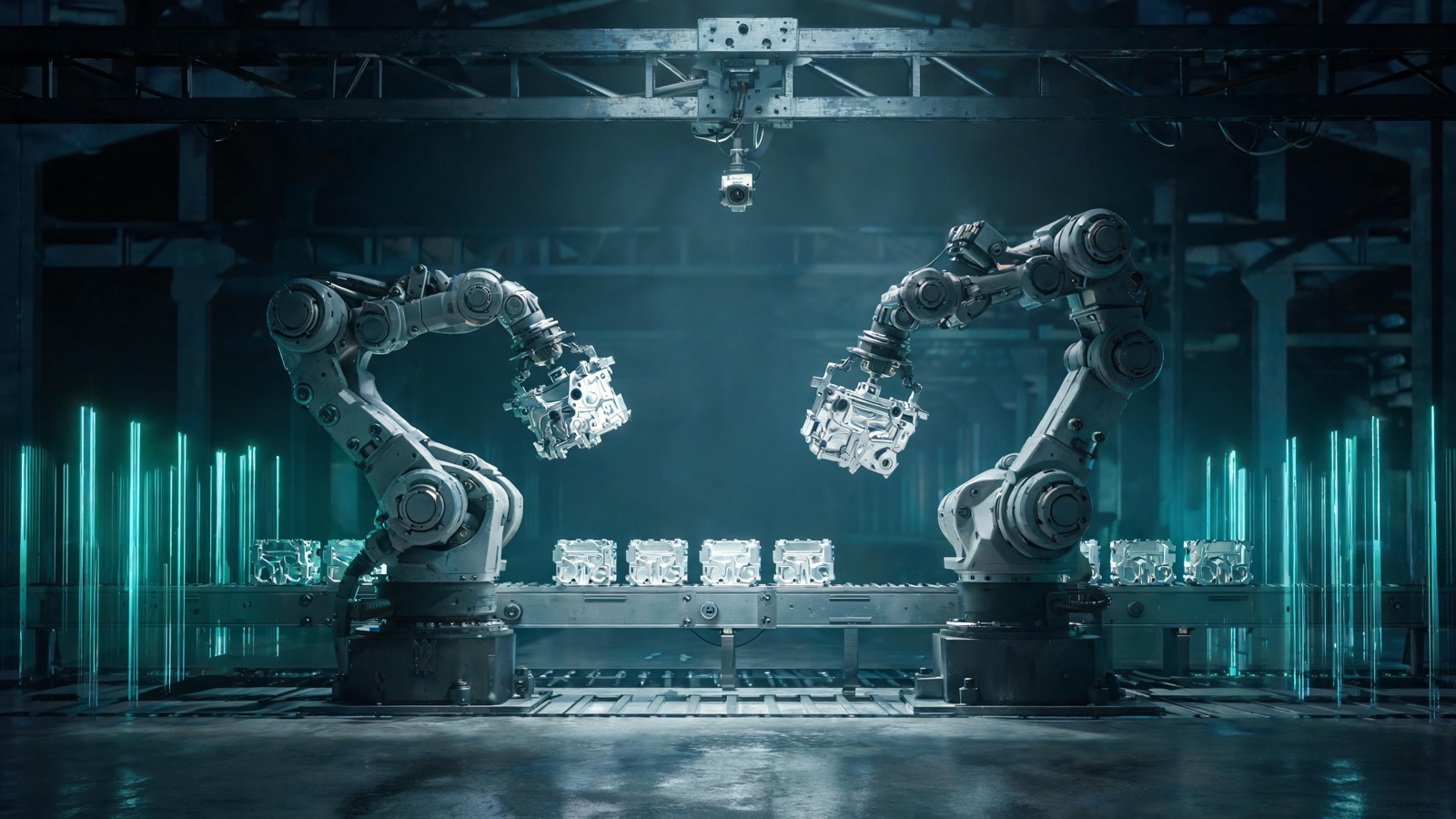
Darioo Industrial / Line 02
Industrial Automation, Controls & Robotics
One engineering team sizes the robot, builds the cell, and proves cycle rate on your parts before your line depends on it.
Overview
Add capacity without adding headcount.
Finding and keeping people for repetitive, high-cycle work is getting harder every year, and the jobs hardest to fill are usually the ones easiest to automate. Darioo Industrial designs and integrates robotic cells that take over the picking, packing, dispensing, and inspection work your floor struggles to staff, so your people move to jobs that need judgment instead of endurance.
We handle the whole cell in Charlotte: robot and end effector selection sized to your payload and reach, machine vision for part presence and inspection, conveyors and material handling to feed and clear the station, and the safety system and risk assessment that keeps the cell compliant with your plant standards. The same engineers who design the cell program the robot, write the PLC logic, and build the guarding, so nothing gets handed off between vendors.
Every cell we build proves cycle rate on your actual parts in our shop before it ships, with you watching it run. That proving step is where part variation, gripper problems, and cycle time gaps get worked out on our schedule, not yours, so the cell earns its keep from the first shift instead of spending its first month in troubleshooting.
- Robotic cell design and integration
- Machine vision and inspection
- Conveyor and material handling systems
- Safety systems and risk assessment
The problem
The station nobody wants to run, and the shift you cannot fill
You have posted the same operator job for months and it will not stay filled. The work itself is the reason: reach in, pick a part, place a part, do it again a thousand times a shift. Good people do not want that job anymore, and the ones who take it rarely stay past ninety days. Every time the seat turns over you lose a training cycle and the line runs short-handed again.
So the manual station becomes the ceiling on your whole line. You can add overtime, but overtime has a limit and a cost, and a tired operator on hour ten makes more mistakes than a fresh one on hour two. The rest of your equipment could run faster. The one station full of people cannot, and it sets the pace for everything downstream of it.
Underneath the staffing problem sits a real injury and turnover cost on the jobs that are repetitive, dirty, or genuinely dangerous, and a real fear about automation itself. You have heard the stories: a robot project that ran two years over schedule, a vendor who disappeared after the sale, a cell that never hit the rate on the sales sheet. That fear is reasonable. It is also the reason the process matters as much as the hardware, and it is why we prove cycle rate on your parts before a cell ever ships.
Read the signs
A robotic cell makes sense on your floor if
- The position sits open for months no matter what you pay, or turns over every few weeks
- The job is repetitive enough to cause wrist, shoulder, or back strain over a full shift
- The process itself is stable and repeatable, not something that changes with every batch
- Parts show up in a consistent, predictable presentation, or could with a simple infeed fix
- Quality on that step depends on an operator staying sharp for eight straight hours
- You are paying overtime just to hit a demand number a straight shift should cover
- A second or third shift is not realistic to staff, so capacity stalls at whatever one shift can run
What you get
Everything this line covers, delivered by one team.
Robot and cell sizing study
Payload, reach, and cycle time analysis that matches the robot and layout to your actual part and takt time.
Machine vision and inspection
Vision systems for part presence, orientation, defect detection, and pass or fail sorting built into the cell logic.
Conveyor and material handling
Infeed, outfeed, and transfer conveyors sized and controlled to keep the robot fed without starving or jamming the line.
Safety system and risk assessment
Guarding, light curtains, e-stops, and a documented risk assessment built to your plant safety standards.
Robot programming
Path, pick, and place programming tuned to your part geometry and cycle time target, done by the same team that designed the cell.
Controls integration
PLC logic and HMI screens that tie the robot, vision, and conveyors into one system your operators can run and your maintenance team can read.
Proving run
The cell runs your parts at your target rate in our shop before it ships, with you watching.
Install and commissioning
Delivery, placement, utility hookup, and startup on your floor, plus operator training.
Not sure if your job is a good fit? Send us a part video.
A short video of the part moving through the station and a target rate is enough for a straight read on whether a robotic cell makes sense, no sales pitch required.
How this line runs
From first call to running on your floor.
Application study
We study your part, cycle time, and floor space, then size the robot and reach honestly, including telling you when a robotic cell is not the right answer.
Simulation and cell layout
The cell gets modeled and simulated before anything is built, so reach, cycle time, and interference with your existing line get worked out on screen, not on your floor.
Risk assessment and safety design
A documented risk assessment drives the guarding, light curtains, and interlocks, built to your plant standards from the start instead of added on after the robot arrives.
Build and integrate
The robot, end of arm tooling, vision, conveyors, and controls get built and integrated in our Charlotte shop by the same team that designed the cell.
Prove cycle rate on real parts
The cell runs your actual parts at your target rate while you watch, so part variation and cycle time gaps get solved here, not during your launch week.
Commission and train
We install, commission, and train your operators and maintenance team, then stay on call through field engineering for the life of the cell.
Where this fits
Applications and industries we build for.
- Pick and place
- Machine tending
- Palletizing and depalletizing
- Packaging and case packing
- Dispensing and assembly
- Welding and joining cells
- Part inspection and sorting
- Material transfer between stations
- Consumer products manufacturing
- Automotive and mobility suppliers
- Food and beverage processing
- Building products and textiles
What a robotic cell integrator actually does
A robotic cell integrator takes a job on your floor and turns it into a working system: the robot sized to the part and payload, the end of arm tooling that actually grips your product, the machine vision that tells the robot what it is looking at, the conveyors that feed and clear the station, and the safety system that keeps people around it working safely. None of those pieces work well in isolation. The robot is only as good as the vision that guides it and the tooling on the end of its arm.
Robot cell integration is also a controls problem as much as a mechanical one. The PLC has to talk to the vision system, the vision system has to talk to the robot, and the whole cell has to talk to your line. When one company designs, programs, and wires all of it, those handoffs disappear. When three vendors split the work, the gaps between them are where cells stall out during commissioning.
Industrial automation company in Charlotte, NC
Darioo Industrial designs, builds, and programs robotic cells under one roof in Charlotte, North Carolina, backed by an ISO 9001:2015 quality system. Manufacturers across the Carolinas and the Southeast use us as their automation integrator, and finished cells ship nationwide once they have proven cycle rate in our shop.
Being local matters less for the sales call and more for the ten years after it. A cell built two states away by a company that has since changed hands is a hard cell to get support on. A cell built by a team you can drive to, with over a decade doing this work, is one you can call when you want to add a second robot or change the part next year.
- Robot and cell design under one roof
- ISO 9001:2015 quality system
- Serving manufacturers across the Carolinas and Southeast
- Complete cells ship nationwide
Machine vision and inspection systems
Machine vision is what lets a robot handle parts that are not perfectly placed every time. Vision-guided picking finds the part on a conveyor or in a bin and tells the robot where it actually is, not where a fixture assumed it would be. That is the difference between a cell that needs a precise, expensive infeed and one that can handle parts arriving with some real-world variation.
Inspection is the other half of the job: checking for a missing feature, a wrong orientation, a defect, or a bad weld, and sorting good parts from bad ones without an operator staring at every piece. Vision earns its cost fastest on high-volume, high-consequence checks, where a human inspector loses focus over a shift and a camera does not. On low-volume or highly variable checks, a simpler mechanical or manual check sometimes beats it, and we will tell you when that is the case.
Robot cell safety and risk assessment
Every robotic cell we build starts its safety design with a documented risk assessment, not a guarding catalog. We look at what the robot can reach, what can go wrong, and who is around it, then size the guarding, light curtains, interlocks, and e-stops to that actual risk instead of a generic template. Safety review happens alongside the mechanical design, not after the robot is already bolted to the floor.
Collaborative robots get marketed as safe enough to skip guarding, and sometimes that is true. Most of the time, the payload, speed, or end of arm tooling on a production cell still calls for real risk reduction: fencing, light curtains, or interlocked doors, even with a collaborative-rated arm. We will give you the honest read on which category your application falls into instead of selling you a smaller safety package because collaborative sounds simpler.
Budget honesty
What actually drives robotic cell cost
The price of a robotic cell swings on a handful of decisions, most of them set before a robot is ever selected. These are the levers, so you can see where the cost comes from while the cell is still a layout on a screen.
Robot size and reach
A bigger payload or longer reach costs more robot and often a bigger footprint. Matching the robot to the actual part, not the biggest one you might someday run, keeps this number honest.
Part presentation and infeed
Parts that arrive neat and orientated are cheap to automate. Parts dumped in a bin or tangled together need vision, bowl feeders, or a redesigned infeed, and that work adds up fast.
End of arm tooling complexity
A simple gripper for one part is inexpensive. Tooling that has to handle a family of parts, switch grippers, or apply real force takes more engineering time and iteration before it is production-ready.
Vision scope
Basic part-present sensing is a small line item. Vision-guided picking out of a bin or defect inspection against tight tolerances is a bigger scope with more programming and testing behind it.
Safety scope
Guarding, light curtains, and interlocks scale with how close people work to the cell and how the robot moves. This gets set by the risk assessment, not by what looks cheapest on paper.
Integration with existing line
A standalone cell is simpler than one that has to talk to an upstream machine, a plant network, or an existing conveyor. Tying into what you already have adds controls work on both ends.
Side by side
Manual station vs robotic cell
Neither option is right for every job. Here is an honest side-by-side for a stable, repetitive process, the kind most robotic cells replace.
| Manual station | Robotic cell | |
|---|---|---|
| Staffing per shift | One or more operators, every shift you run | No operator required to run the station itself |
| Consistency | Varies with fatigue, attention, and who is working | Same motion, same path, every cycle |
| Throughput ceiling | Capped by human pace and rest breaks | Set by cycle time, and steady across a full shift |
| Quality variation | Tracks operator skill and how many hours into the shift it is | Tracks tooling and programming, not attention span |
| Injury exposure | Repetitive-motion and strain risk builds up over years | Risk shifts to setup, maintenance, and guarding upkeep |
| Cost behavior over time | Labor cost per part stays roughly flat or climbs with turnover and overtime | Higher cost up front, then a largely fixed cost that does not scale with volume |
Line 02 questions
Asked on almost every automation & robotics call.
How do you decide which jobs to automate first?
We look at the jobs that are hardest to staff, most repetitive, or carry the most injury risk, and we run the cycle time math against your labor cost. Not every job on your floor is a good automation candidate, and we will tell you when catalog equipment or a process change beats a robotic cell.
What if our parts vary or are hard to grip?
Part variation is the most common reason robotic cells fail on the floor, which is why we design and test the end of arm tooling and vision system against your actual parts, not a sample photo. If gripping is genuinely hard, we iterate the tooling in-house until the cell handles the variation you actually run.
How do you handle safety and guarding?
Every cell gets a documented risk assessment before we finalize guarding, and the guarding, light curtains, and e-stops are built to match your plant safety standards, not a generic template. Safety review happens alongside the mechanical design, not after the robot is already bolted down.
What happens if the cell does not hit our cycle time target?
That risk gets resolved before shipping. The cell runs your parts at your target rate in our shop, with you watching, so cycle time problems get solved in Charlotte instead of discovered on your production floor during launch week. If the numbers do not line up, we adjust the tooling or programming and run it again until they do.
How long does a robotic cell take from kickoff to running?
Most cells run a few months from application study to installed, driven mainly by robot and component lead times and how much vision or tooling development the parts need. A simple pick and place cell moves faster than a multi-station line with heavy vision work. You get a real schedule with the quote, including the design review and proving-run dates, so you know where the project stands.
Can you build a cell around robots we already own?
Yes. If you already have robots on hand or a brand preference from your other lines, we design and program the cell around that hardware instead of specifying our own. We will tell you honestly if the robot you have does not fit the payload or reach the application actually needs.
What if we run a lot of different parts through the same line?
High-mix operations are still automatable, but the cell has to be designed for it from the start, usually with vision-guided picking and quick-change tooling instead of a single fixed gripper. That flexibility costs more up front than a single-part cell, and we will size that trade-off honestly before you commit to it.
Do you provide training and documentation with the cell?
Yes. Every cell ships with operator training on your floor, plus a documentation package covering drawings, controls schematics, and a spare parts list your maintenance team can actually use when something needs attention at two in the morning.
Related lines
Often scoped together with this work.
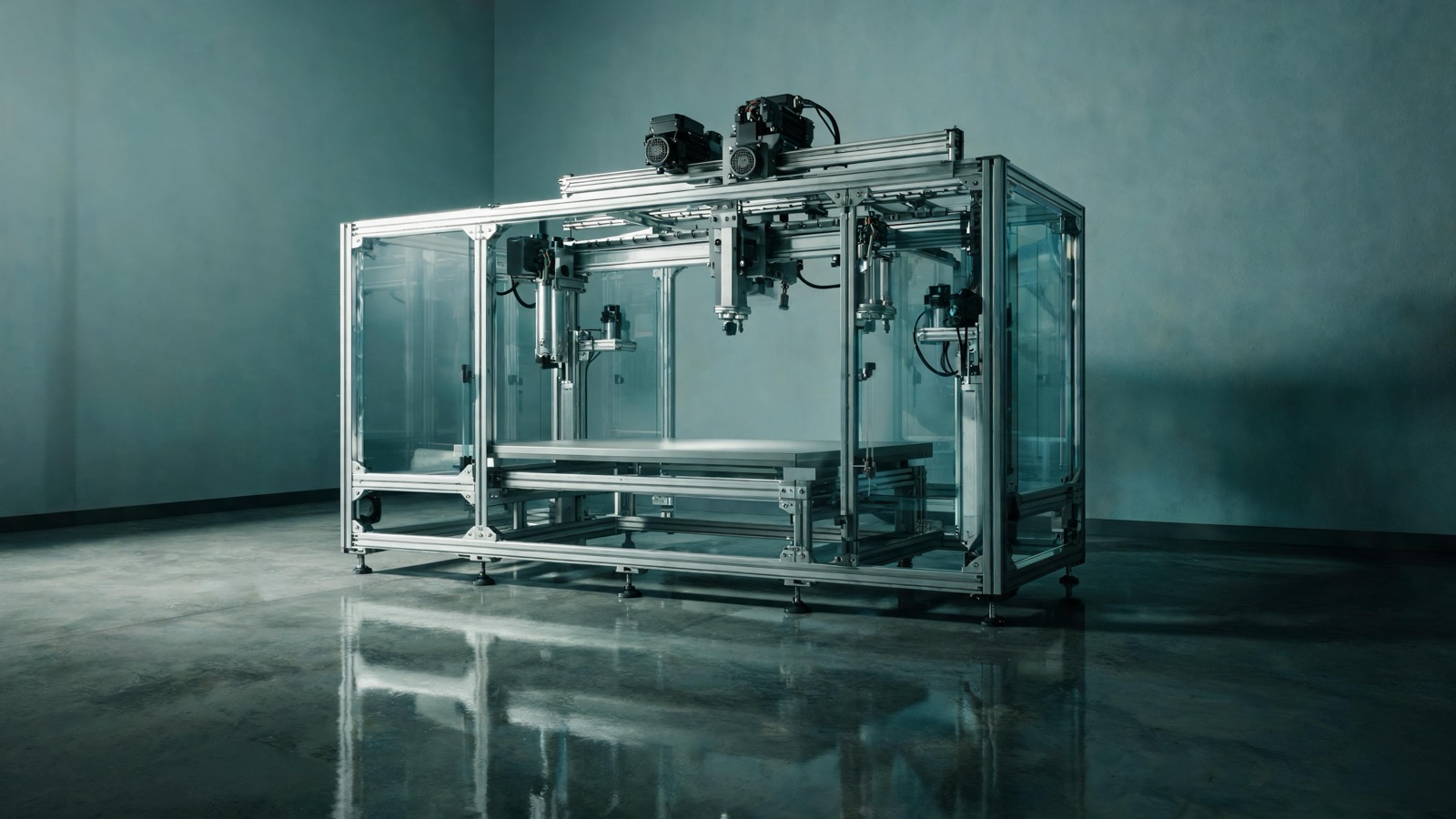
Custom Machine Design & Build
Machines nobody sells, built for the job only you have.
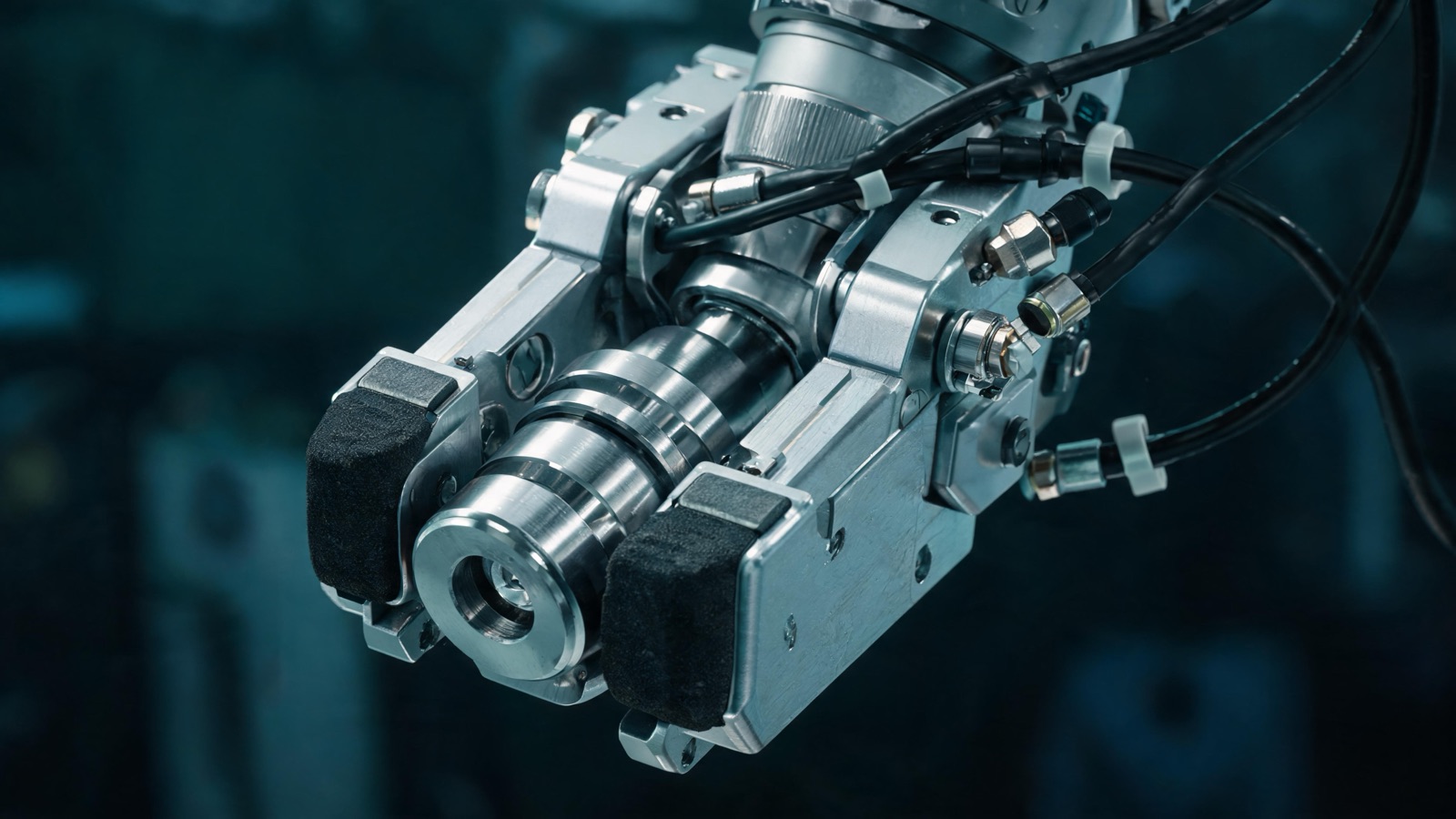
End of Arm Tooling (EOAT) Design & Manufacturing
The last six inches decide the whole cell.
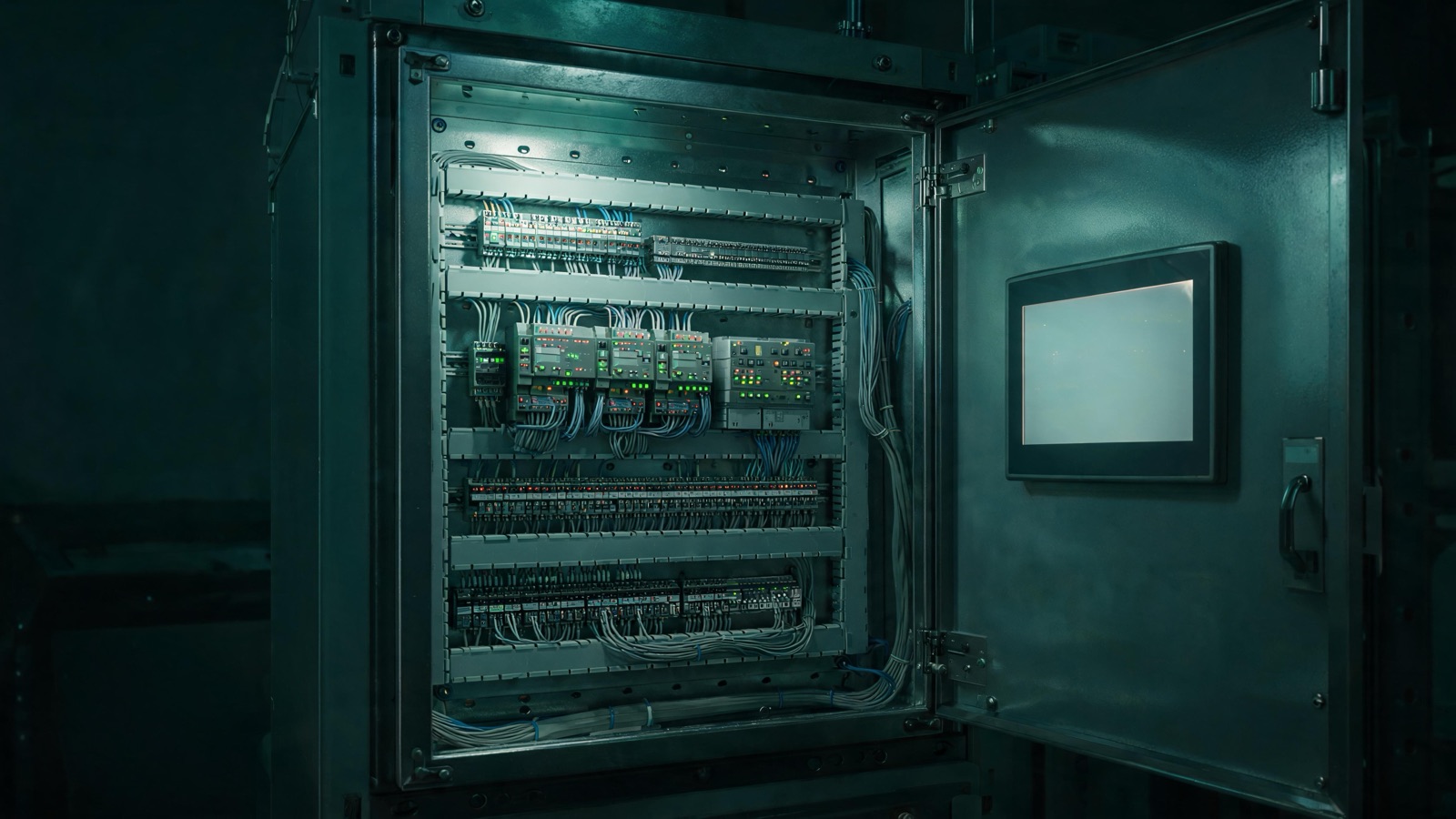
Industrial Control Panel Design & Build, PLC & HMI Programming
Panels wired like we have to service them. Because we do.
Start here
Talk to an engineer about line 02.
Send the part, the problem, or the machine that is fighting you. We will tell you straight whether this line is the right fix.